The Correction
Eight days ago, in this space, I compared the Democrats’ promised blue wave to a British summer and observed, with some satisfaction, that 49 Senate seats is what most people call losing. Democrats then went out and won 54 of them, against 44 for Republicans, with Alaska and Mississippi still counting and Democrats narrowly ahead in both. They flipped seven seats, Texas among them, where James Talarico became the first Democrat the state has sent to the Senate since 1988. In the House they had 253 seats to the Republicans’ 162, with 20 races still uncalled, their largest majority since 2008.
(Those counts were current as of Friday afternoon, November 6, and are still moving as the last ballots are tallied.)
Susan Collins, who had outlasted most of Maine’s lighthouses and several of its fisheries, lost.
This column never predicted the result, but it sneered at the people who did, which in a fair world counts for about the same. The pollsters were right and my eyebrow was wrong. I would like the record to show that I said so before anyone else could, which is the closest a columnist gets to an apology.
Linda, our weary voter from last time, turned out too. Linda was a composite. The turnout was not. She was evidently less tired than I gave her credit for, or perhaps only tired of something in particular. Exit polls put President Trump’s approval at 38%, on course for the lowest of any president at a midterm. Whatever she was rebuking, she used both hands.
The one forecast I made with confidence was about what would happen next. Whoever won, I wrote, both parties would be fully occupied with each other, and Linda’s problems would be left on the doorstep. Four days in, that one is holding up nicely. The only surprise is that the winners started with themselves.
The Letter From Tacoma
My sister, Sarah Wells, lives in Tacoma, Washington. She is a lifelong Democrat, which in Tacoma is about as remarkable as owning a raincoat. Within days of the result she wrote to her two senators, Maria Cantwell and Patty Murray, and then forwarded the letter to me, perhaps suspecting where it might end up.
It is not a gentle letter. Mr Schumer, she writes, “has not been our ally, much less our champion.” The only thing he has shown a talent for leading, in her telling, is the Democrats’ surrender. She wants her senators to vote against him, publicly, and to explain themselves to the people who elected them.
She has company. Mr Schumer, who has led Senate Democrats since 2017, told reporters the day after the election that he would be reelected majority leader. At least five incoming Democratic senators have said they will oppose him, and a couple more have declined to commit. The vote is expected in early December by secret ballot, which is the traditional way a party says one thing in public and does another in private, and which explains why so many senators are suddenly very relaxed about their courage.
Five rebels will not topple him, and nobody has stepped forward to run against him. The freshmen have enough votes to grumble and not nearly enough to win.
To be fair to Mr Schumer, he says his priorities will be lowering costs and rooting out corruption. Sarah’s letter asks for exactly that, with the details attached. She wants a ban on congressional stock trading, tougher financial disclosure and penalties with teeth. The difference between them is that she wants the promises in writing before the vote, and he would prefer to be trusted. She has met politicians before. So, unfortunately, have I.
Her third demand is the one I keep coming back to, the way a tongue keeps finding a chipped tooth. She asks for an aggressive campaign finance agenda to curb billionaires, corporate PACs and dark money. On that we agree entirely. Where I go a step further is in what I think it will take to get there.
The Action

Start with the action. Elon Musk put roughly $474 million into these midterms, by a New York Times tally, making him the largest disclosed donor in modern American politics. More than $200 million of it went to Texas alone, in a failed bid to elect Ken Paxton. Public Citizen counted 515 donors who each gave at least $1 million to super PACs this cycle. Together they supplied more than 70% of the money those groups raised from individuals, companies and nonprofits.
In a country of 340 million people, a crowd that would fit comfortably in a high school gym writes most of the checks.
This is where a decade of courtship was always heading, although courtship is too polite a word. President Trump has never hidden his fondness for the very rich, and what began as flirtation has ended in a sale, with the rest of us as the merchandise. Mr Musk ran the president’s cost-cutting crusade from inside the government, fell out with him in a very public tiff in 2025, and then came back bearing a checkbook, which is how most billionaire romances end.
The romance has paid well. The 2025 tax law was the president’s signature achievement, and the Congressional Budget Office found that it left the poorest households worse off on net, largely through cuts to Medicaid and food aid, while most of the benefit flowed toward the top. An early analysis by Yale’s Budget Lab, counting the president’s tariffs too, put the cost to the poorest tenth of households at more than 6% of their income a year, while the richest tenth came out ahead. Linda’s groceries, it turns out, were helping to pay for somebody else’s yacht.
Before anyone on my side of this argument gets smug, the rich are not a one-party problem. The Senate Majority PAC, the super PAC aligned with Chuck Schumer, took $244 million this cycle from just 44 donors, a crowd that would fit comfortably in a stretch limousine. Counting candidates and outside groups together, Democrats appear to have outspent Republicans this year, by roughly $5.5 billion to $5.1 billion. And one of the party’s eager 2028 hopefuls, JB Pritzker, is himself a billionaire, which at least spares him the indignity of asking one. My sister put it in five words. “Different parties, same broken system.”
The Reaction
Newton’s third law holds that for every action there is an equal and opposite reaction. I have a political version, and I hold it with some conviction. For every billionaire who buys a seat at the table, there will be an equal and opposite socialist who wants to tax the table. Push hard enough on one end of the country and the other end pushes back. Newton was describing physics. I am describing a prescription.
The reaction already wears a Bernie Sanders sweatshirt. Mr Sanders and Alexandria Ocasio-Cortez spent much of the last two years on their Fighting Oligarchy tour, drawing crowds from Denver to Idaho that the party’s consultants had assumed existed only in fundraising emails. Ms Ocasio-Cortez has said she is seriously considering a run for president. Democratic Socialists of America chapters in Los Angeles, Atlanta and Chicago have already passed resolutions urging her to.
The group claims more than 125,000 members, enough to fill a very long meeting about meeting procedures, and at least seven of them will sit in the new Congress, the most in its history. Los Angeles has just elected a democratic socialist mayor, and Seattle has had one since January.
By one tally, Mr Musk’s own super PAC featured Ms Ocasio-Cortez in nearly all of its online appeals. Few people have done more to raise her profile than the man who spent nearly half a billion dollars trying to beat her party. Newton would have enjoyed that.
So here is my confession, made in a column that began with one. I think this reaction is the best antidote we have to an administration that has auctioned off the country, and come 2028 I expect to support it.
My own view, and I should stress it is mine, is that the dose should come from Ms Ocasio-Cortez, with Mr Sanders, now 85, in the role he seems born for, role model and mentor rather than candidate. Not everyone who wants the medicine agrees on the brand. Some in the DSA have bristled at the air of inevitability around her, and the group has yet to settle on anyone.
I am not a socialist, and I do not plan to become one. I support socialism the way a man with a migraine supports ibuprofen. You take it when the pain arrives, you follow the label, and you do not take it with breakfast every day for the rest of your life just because it worked once. Plenty of people in the movement take it daily and swear by it. I respect them. I have also watched what happens to a city that doubles the dose.
The Prescription
So what is actually in the bottle? For me the measured dose looks something like this. Tax the very largest fortunes hard enough that no single one can buy a Senate race. Let Medicare bargain down the price of far more prescription drugs than it does today. Offer a public option for health insurance alongside the private kind. Build housing the market will not, at a scale that dents the rent. Enforce antitrust law against companies big enough to write their own rules.
And raise the federal minimum wage, which has sat at $7.25 since 2009, long enough to qualify for a pension.
The test for every pill is Linda’s kitchen table. The last column found her worrying about groceries, deductibles and a car repair she had been putting off since spring, and health costs topped Americans’ domestic worries this year. A pill that does nothing for her bills is just a slogan with a childproof cap.
The overdose is easier to describe, because I have seen it. It looks like treating the police as the enemy, the drug market as a lifestyle choice and every employer as a suspect. It looks like Seattle.
The Seattle Experiment
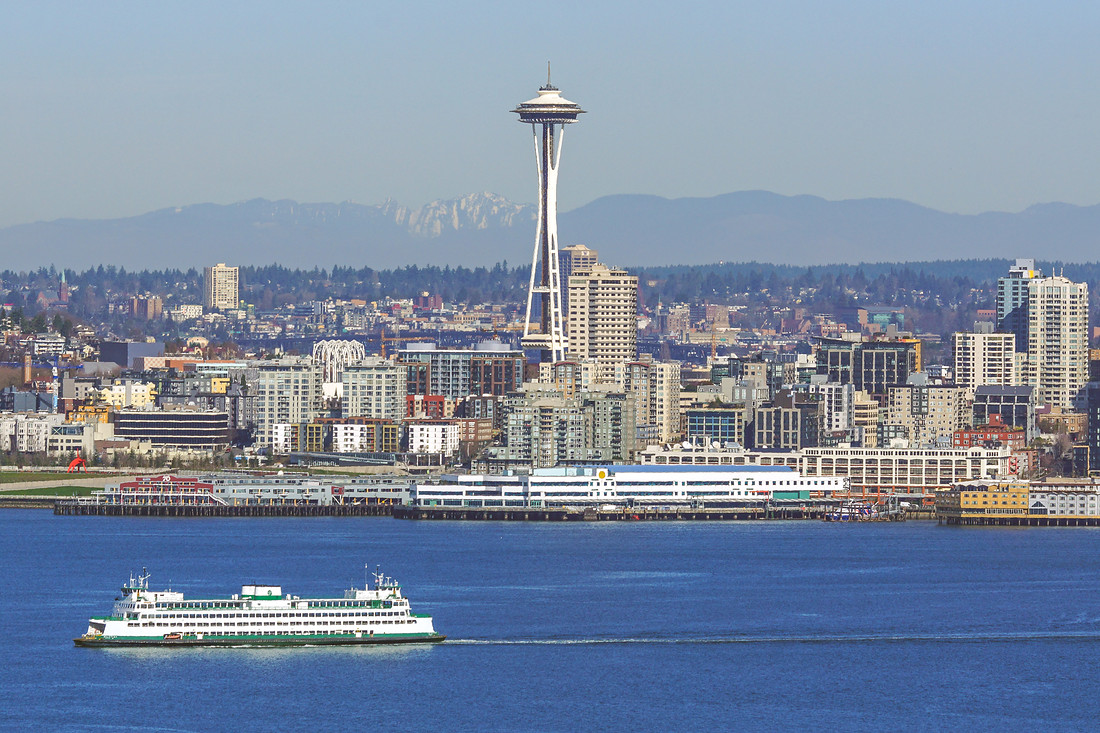
Every medicine comes with a leaflet of side effects. Seattle is mine. It is the right place to read the leaflet, because Seattle is where Newton’s law has been running in miniature for a decade. The Seattle area is home to two of the largest fortunes on earth, Amazon’s and Microsoft’s, and Seattle is the city that elected Kshama Sawant.
Ms Sawant joined the city council in 2014, an economics teacher and avowed socialist, and spent ten years as its only one. She was the reaction made flesh. She pushed the city to a $15 minimum wage. She championed a head tax on big employers, nicknamed the Amazon tax, which the council passed unanimously in 2018 and repealed within a month after Amazon bankrolled a referendum against it. She came back in 2020 and helped win the JumpStart payroll tax, which now raises more than $200 million a year.
When Amazon poured $1.5 million into the 2019 council races and backed her opponent, she won anyway. Action, reaction.
Seattle never elected many socialists. It did not need to. A city picks up the flavor the way a stew picks up garlic, and the ideas Ms Sawant shouted through a megaphone became the furniture of local politics. The same goes for the state. Most of Washington’s 39 counties vote Republican, but the Puget Sound counties outvote the rest with room to spare, and Olympia governs to suit them. What follows is what happens when the reaction runs with nobody minding the dose.
The Overdose
The most famous overdose came in June 2020. On June 8, after days of clashes with protesters, the police walked out of their East Precinct on Capitol Hill. Protesters barricaded several blocks and named them the Capitol Hill Organized Protest, or CHOP. Mayor Jenny Durkan told CNN the city could have “the summer of love.” She later said it was a joke.
For the people who lived and worked there, the city had in effect handed over the neighborhood and wished them luck. When someone broke into Car Tender, a family auto shop on the edge of the zone, and started a fire, the owner and his son called 911 by their count 19 times. Nobody came.
Then the shooting started. Horace Lorenzo Anderson, 19, was killed near the barricades on June 20, and protesters said the medics they called for never arrived. Nine days later Antonio Mays Jr., 16, was shot seven times in a Jeep while police cars waited about a block away. Volunteers drove him off in search of help, and officers did not reach the Jeep for roughly four hours. His killing remains unsolved.
Police retook the precinct on July 1, and within weeks a majority of the council had pledged to cut the police budget in half. The city later paid $3.65 million to settle a lawsuit from neighborhood businesses and residents, after a judge found it had failed to preserve officials’ text messages from those weeks.
The quieter doses did more lasting harm. After the state Supreme Court struck down felony drug possession in 2021, the legislature’s replacement left possession largely unenforced for two years, and in 2023 Seattle’s council voted 5-4 against letting its own city attorney prosecute public drug use before reversing itself that September.
The results are on display at Third and Pike and Third and Pine, a couple of blocks from Pike Place Market, where the city’s best-known open-air drug market greets the tourists.
Also in 2021, the legislature barred most police chases, so a car thief who simply kept driving usually got to keep the car, until a Republican-backed initiative restored pursuits in 2024.
Seattle lost more than 700 officers in five years. It has since raised starting pay to nearly $118,000, the third highest among America’s big cities, and still has only 863 patrol officers ready to deploy. Money fixed the paycheck. It has not fixed the reputation of a city that spent 2020 promising to halve its police budget.
None of this was a billionaire’s doing. That is rather the point. A reaction aimed at concentrated wealth ended up landing on a mechanic, a teenager in a Jeep and a tourist stepping around foil on Third Avenue.
The Uncounted Pills

Homelessness is where the reaction should have shone, and where it most needed my sister’s kind of accountability. King County’s latest count found 18,365 people homeless on a given night, up 9% since 2024 after a 26% jump in the two years before.
In 2023 the regional homelessness authority priced a five-year plan to end it at $11.8 billion, which works out to well over $100,000 per person per year. That lends some weight to a familiar Seattle quip that the region could simply hand every homeless person the money. The plan was never funded, which may be the only reason the quip has not been tested.
What has been tested is the bookkeeping. In October an outside audit found a $16.7 million hole in the authority’s accounts that it cannot recover, and one Seattle councilmember called for dissolving the agency outright. Meanwhile the city’s contract for a new shelter village in Interbay swelled from $1.3 million to almost $4 million, and in September Pallet, the Everett company that built it, shut down with a day’s notice, leaving operators to handle repairs from an online handbook, which is one way to teach self-reliance.
Ask where the money went and Seattle will tell you that you lack compassion. Generosity with nobody counting the pills curdles into something that looks a lot like the greed it set out to cure, only with nicer slogans. The billionaires would recognize it at once.
The Mayor
Katie Wilson took up the baton. A democratic socialist who helped build the campaign for the JumpStart tax, she narrowly unseated Mayor Bruce Harrell last year on a campaign about affordability, best remembered for an ad about a $7 slice of pizza. Ten months in, nobody has reported the pizza getting any cheaper.
Her aim at the rich has been enthusiastic and her accuracy less so. When Washington passed its new tax on high earners, she greeted news of millionaires leaving with a cheerful wave goodbye.
She called for a boycott of Starbucks, Seattle’s most famous export apart from grunge and rain, which is a bit like the mayor of Detroit boycotting cars, then reversed herself and conceded it had done more harm than good, just as the company announced a major expansion in Nashville.
Meanwhile the millionaires were not the only ones waving. Downtown office vacancy reached 36.5% in the first quarter, Cushman & Wakefield ranked the Seattle market the emptiest of any major American city, and business groups blame the payroll tax at least in part.
And when a shooting at the Bite of Seattle festival killed three people in July, the only official word for roughly five hours was a single post from the mayor’s account.
Fairness demands a few footnotes in prose. Remote work and tech layoffs emptied office towers everywhere, and downtown Seattle finally gained occupied space in the third quarter. Homelessness has risen by about a quarter across the whole state since 2022, not just in Seattle. And the harshest review of Ms Wilson’s first hundred days came from the left, in a University of Washington student paper column complaining that she had delivered on none of her signature promises. When one side calls you too socialist and the other says you are not socialist enough, you have at least achieved bipartisanship.
The lesson is not that the medicine is poison. Seattle took a strong dose for the right reasons, against fortunes that genuinely do too much to bend its politics, and then forgot that a dose is supposed to be measured.
Second Opinions
None of that has talked me out of the medicine. Seattle’s $15 minimum wage was once denounced as a job killer and is now so ordinary that other cities copied it. The JumpStart tax pays for housing. Researchers who have studied homelessness city by city find that it tracks housing costs more than addiction or poverty, and Seattle’s tech boom sent housing costs soaring whoever sat on the council. Voters keep choosing the left there, and not by accident.
The bigger point is Tuesday. Democrats ran on affordability and against oligarchy, the very message the left had been pushing for years, and won a Senate seat in Texas.
Here, though, I should heed my own warning from last week, that midterm winners routinely mistake a rebuke of the other side for a mandate of their own. Many of Tuesday’s winners were no socialists. James Talarico is a former seminarian and state legislator, and Roy Cooper, who flipped North Carolina, is a two-term former governor of the cautious variety.
With the president at 38%, a fair share of Tuesday was simply a verdict on him. The reaction pushed. It did not push alone.
The argument against me comes from both directions, which is usually a sign of a moderate or a fool. From the right, the case is that there is no safe dose. Business groups in Seattle say the payroll tax helped empty the towers, and one suspects Starbucks did not pick Nashville for the barbecue. Tuesday, they would add, proves the point. Mr Musk’s nearly half a billion bought him almost nothing. Mr Paxton lost, Ms Collins lost, and the man who could afford anything could not afford Texas. Voters cured themselves, and nobody had to nationalize a coffee chain.
From the left, the complaint is that you cannot take socialism as needed. The democratic socialists now organizing for 2028 want a candidate committed to a socialist economy, not a pain reliever. And some Democratic strategists think the whole thing is a fantasy. One told The Hill that anyone expecting a DSA or progressive candidate to win in 2028 might also be interested in buying a bridge.
Those are fair points, and some of them land. A few land rather hard.
The Dosage
I grant most of it and keep the prescription. Here is the thing about Newton’s third law that rarely makes the bumper sticker. The two forces act on different bodies, so they never cancel each other out. That is precisely why the reaction matters. Without an opposite push, the billionaire’s push simply moves the government wherever he likes, as the past two years have shown. The socialist pushing back is the only thing keeping the furniture in place.
The danger is the overdose. Push too hard from the other end and the person in the middle gets shoved from both sides, and that person is Linda. A billionaire who tries to buy a Senate seat and a mayor who waves the taxpayers goodbye are both treating the public as something to be managed rather than served. The trick is to take enough of the medicine to break the fever without ending up in Seattle’s waiting room.
It can be done. Milwaukee elected socialist mayors for most of the half century after 1910, and they were remembered less for revolution than for sewers, clean water, public parks and famously honest books. Their critics called them sewer socialists. They took it as a compliment. That is what a measured dose looks like.
Which is why Sarah’s letter matters more than any candidate. Ban members of Congress from trading stocks. Make them disclose what they own. Drag dark money into the light and put real limits on how much any one person can spend buying an election. That is preventive care. Remove the lever the billionaires pull, and you need a good deal less medicine for the headache.
Some of it is closer than you might think, and some of it much further. In July the House passed a ban on members buying new stocks, 232-198, though Republicans attached a voter ID requirement that Democrats called a poison pill, and it now sits in the Senate.
Real limits on election spending are harder. Since the Supreme Court’s Citizens United decision in 2010, independent spending on elections has been treated as protected speech, so serious limits would take either a different court or a constitutional amendment. That is preventive care measured in decades.
None of it requires a revolution, only something far rarer, a Congress willing to vote against its own interests.
And the headache will be back. One bad night at the casino does not mean the house has stopped winning. It means the house has learned which tables to avoid. Most of those 515 donors will return in 2028, with long memories and deeper pockets.
Delivering the Accountability
Democrats now hold the House, the Senate and a rare opening. They have two years to do the preventive work before the next attack arrives. If they spend it waving Mr Schumer through in December and doing little after that, the billionaires will be back by 2028 and I will be back at the medicine cabinet, reading the label more carefully this time.
My sister ended her letter with a sentence better than anything in this column, so I will leave it to her.
“We delivered the votes. Now we expect you to deliver the accountability.”
Newton never had to stand for reelection. Her senators do, and they have until December.
The Letter, in Full
Sarah Wells of Tacoma, Washington, sent the following letter to Senators Maria Cantwell and Patty Murray in the days after the November 3 election. It appears here as she wrote it.
After Tuesday’s historic blue-wave election, I am writing as a lifelong Democrat and one of many Americans demanding meaningful change in Democratic leadership. Across the country, grassroots activists and ordinary voters have been expressing their frustration with corruption, corporate influence, political complacency, and an establishment that seems more interested in protecting its own power than representing the people.
This election was about defeating Republican extremism and standing in opposition to fascism. But Democratic leaders should not mistake that victory for an endorsement of the political establishment or a mandate to continue business as usual.
Yet Chuck Schumer appears eager to claim this historic landslide as a victory for his leadership. It is not his victory. It belongs to the grassroots movement that organized, mobilized, and stood up against fascism. This is our victory. The people’s victory.
Schumer has not been our ally, much less our champion. He seems to believe that his position within the party establishment entitles him to continued leadership. It does not. Leadership must be earned through accountability, courage, and a willingness to fight for the people who put Democrats in office.
For far too long, politicians from both parties have prioritized the interests of foreign governments, billionaires, corporations, and the Epstein class over those of ordinary Americans. These are public servants who have forgotten whom they are supposed to serve.
Chuck Schumer represents the very problems that have eroded public trust in establishment politics. Republicans and corporate establishment Democrats may claim to stand on opposite sides of the political divide, but too often they serve the same wealthy donors, corporate interests, and entrenched power structures. They perpetuate a system in which political influence is bought and sold, the powerful are shielded from accountability, and ordinary Americans are left fighting for scraps. Different parties, same broken system, and the same people paying the price.
Schumer does not deserve to be crowned the next leader of Senate Democrats. The only thing he has consistently demonstrated an ability to lead is the Democrats’ surrender. He does not represent the grassroots movement that helped deliver Tuesday’s historic victory, and he has no right to treat that victory as an endorsement of his leadership.
The selection of the next Senate Democratic leader must be transparent and accountable to the voters who made this victory possible. While Senate Democrats formally elect their own leader, their constituents deserve to know whom they intend to support, why they support that person, and what commitments they will demand in return.
We did not deliver a historic blue wave just to hand power back to the same establishment that has repeatedly failed us. We voted for change, and we expect to see it.
Senator, I am asking you to make the following commitments publicly and unequivocally:
- Publicly oppose Chuck Schumer’s continued leadership of Senate Democrats and commit to voting against him in the next Senate Democratic leadership election.
- Commit to supporting only a leadership candidate who will make comprehensive anti-corruption reform a central legislative priority, including banning congressional stock trading, preventing members of Congress and their immediate families from using public office for personal financial gain, strengthening financial disclosure requirements, and establishing meaningful penalties for violations.
- Demand an aggressive campaign finance reform agenda aimed at reducing the influence of billionaires, corporate PACs, dark money, and special interests over federal elections and legislative decisions.
- Insist on genuine accountability for corruption and abuses of power, regardless of political affiliation, wealth, or influence. No politician, donor, corporate executive, or other powerful individual should be shielded from investigation or prosecution because of their connections.
- Demand transparency in the Senate Democratic leadership selection process, including public statements from leadership candidates detailing their legislative priorities, specific anti-corruption commitments, and plans to restore public trust.
- Publicly explain your leadership vote to your constituents, including how the candidate you support meets these standards and what concrete actions you will take to hold that leader accountable.
The American people did not deliver this historic victory to reward an entrenched political establishment. We voted for a fundamental change in whose interests our government serves, and we expect Democratic leadership to reflect that demand.
I am asking you to publicly state whether you will oppose Chuck Schumer, identify the specific anti-corruption reforms you will require of any candidate seeking your leadership vote, and commit to withholding your support from anyone unwilling to pursue those reforms. I expect these commitments to be made publicly before the Senate Democratic leadership election, not after the decision has already been made.
Your constituents deserve more than vague assurances, carefully worded statements, or promises of change that disappear once the election is over. We deserve a direct answer, a public commitment, and leadership willing to confront corruption even when doing so threatens the interests of its own party.
We delivered the votes. Now we expect you to deliver the accountability.
Sarah Wells
Tacoma, Washington
Send it yourself. The copy below ends with a blank for your own name.
Email it to yourselfDownload as text
Or send it to your senators in one step, under your own name: We Delivered the Votes. Now Deliver the Accountability.
Find who to send it to: your senators · your representative