“I’ve Got Ice”
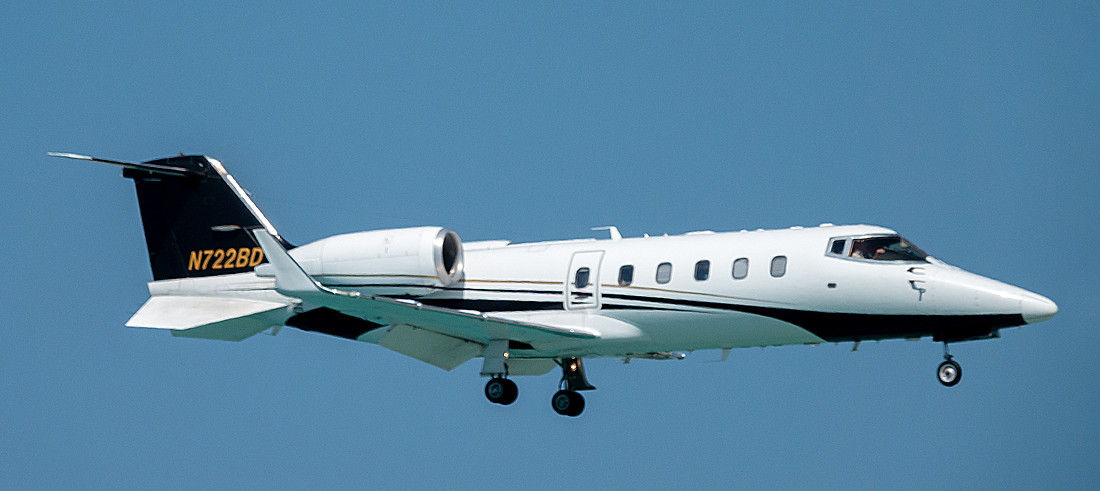
I have not watched an airplane video in five days, and I have never been more aware of airplanes.
That is not fear. I will board the next flight without fuss. It is something stranger. A crash involving nine people I never met, in a state I do not live in, has quietly rearranged my YouTube habits. So let us start where they did, at 35,000 feet over Florida, on a Sunday, on the way to a vacation.
About ten minutes before the end, her stepfather has said, the first officer sent her boyfriend a text. He was also a pilot.
I’ve got turbulence, I’ve got ice.
It reads like weather chatter between professionals, which is what it was.
She was Nathalia Gadelha Filgueiras, and she was 20. She had wanted to fly since she was a girl and, by her family’s account, earned her license while still in high school. At an age when most of us were struggling to park a hatchback, she was in the right seat of a jet. In a clip shared after her death, she said she liked being different from everyone, and thought it was cool. It was.
Next to her sat the captain, Jeff Gregory, 55, an experienced pilot from Pennsylvania. The man in the left seat is usually the last name the public learns and the first one investigators study. He deserves better than to become a line in a probable-cause report.
Managing the Ice
At about 12:47pm Eastern the crew was on the radio to controllers in Miami. The recordings, since played on every network, are calm to the point of boredom. Outside it was −53°F.
We’re managing the ice, but it is moderate turbulence.
The controller said he was working them into his airspace.
Behind them, presumably, the cabin was doing what cabins do. Adam Robinson, 45, was an Austin entrepreneur, founder and chief executive of Retention.com and RB2b, two marketing-technology firms. His wife, Helen Sharp, 40, appears in the coverage chiefly as “his wife,” the usual injustice of headlines about a tech boss and his family. She was a good deal more than that. She had started her own communications firm, Influential PR, and a pottery studio under her own name, and in September she announced that the family was making Aspen, Colorado, its permanent home as she turned to ceramics. The families’ own statement is fairer than the headlines. It says simply that they were deeply loved and will be missed endlessly.
Their children were Emma, 4, and Charlie, 2. A relative, Anthony Robinson, wrote on Facebook that they were “the light of their lives.” At those ages a biography is mostly favorite snacks and bedtime negotiations. That is rather the point.
Looking after them was Anita Maria Cetina, their nanny. Nannies rarely make the news. This one made the family tribute, which is the better honor. She “showed us a legacy of unconditional love and devotion,” the families said.
And along for the trip were Charmi Fehr and Rachael Reed, a couple and friends of the family, who co-owned a hotel in Honduras. Their families called them “full of joy and adventure,” people who “loved their people fiercely, fully and without hesitation.” Somewhere ahead, the Bahamas were waiting.
Mayday
Then came rain, and a request to climb. Then the call came.
We’re descending 8,000. Mayday, mayday. We’re descending 10,000 feet per minute.
This is the moment the story stops being weather and starts being news, and it is worth asking why it grips us so. Paul Slovic, a psychologist at the University of Oregon, has spent decades showing that people feel far more for one named victim with a face than for statistics about thousands. In one 2007 study with Deborah Small and George Loewenstein, adding numbers to a single child’s story actually reduced sympathy. Slovic calls the flip side “psychic numbing.” The more who die, the less we feel per death.
Nine is, if this is not too grim a word, a sweet spot. It is small enough to know each by name and large enough to be a catastrophe. Two of them were small children. One had barely left her teens. And every one of them was going on vacation, which most of us have done more times than we can count. That familiarity does the rest. We feel most for the people whose places we can imagine taking. Few of us can picture ourselves in a war zone. Nearly all of us have boarded a flight with a carry-on and a fractious toddler.
Twenty Thousand Feet a Minute
Declare an emergency, 722 Bravo Delta. We are in an overspeed condition, descending 20,000 feet per minute.
Then silence.
CNN reckons about 90 seconds passed between that dull report of ice and the silence, and that the jet fell more than 27,000 feet in roughly a minute. A federal investigator said on Monday that the jet likely began breaking apart before it hit the ground. The cause is for the National Transportation Safety Board to establish, and it will take its time.
What the recording does establish is character. Mikaela Schluth, a friend of Ms. Filgueiras since middle school, told CBS she was proud of how her friend “was able to stay calm and give information, up until the last minute.” Listen and that is what you hear. A 20-year-old reads out, clearly, the numbers of her own death so that someone on the ground would know. Few of us will ever be that composed about anything.
There is a mercy buried in those figures too, and it is permissible to say so. Ninety seconds is not long enough for a long ordeal. And the end, at that speed, came faster than any nerve could carry the news.
A Hole Where a Story Should Be
Most crash coverage follows a template. There is a tail fin poking out of a field, a scorched length of fuselage, the reassuring shape of a machine that failed. The template comforts because it implies a story. Here is the plane, something went wrong, and experts will explain.
This one broke the template. The pictures show a crater beside a busy road, filling with water, ringed by debris small enough to pass for litter. There is no wing. There is no tail. The aircraft and the nine people in it seem simply to have stopped existing. The impact broke water mains and flooded the area. The county opened its emergency operations center, and some 600 neighbors were forced from their homes.
Then there is the dashcam. At around 12:50pm, on South Military Trail between Cresthaven Boulevard and 10th Avenue North, a passing motorist’s camera caught a few grainy frames of the jet’s final instant. It has aired widely since. It is barely a flip-book. Yet the mind, which abhors a gap, animates it anyway, and runs it again at three in the morning. We are gripped less by what the pictures show than by what they refuse to. A wreck can be understood. A hole cannot.
Which explains the swiping. A cockpit thumbnail, a landing compilation, a cheerful video about a vintage Cessna. Thumb, swipe, gone. Call it sensible dosing. After the Boston Marathon bombing in 2013, researchers at the University of California, Irvine, found that people who watched six or more hours a day of coverage reported more acute stress than some who had been at the finish line. Grief, it turns out, can be streamed. Mine has settled into a background hum. It is quieter than the mourning we keep for people we know, more like a stomach that has had enough of something and is politely declining seconds.
Side by Side
Here is the thought that feels as if it ought to come with an apology. There is comfort in the fact that they went together.
A mother, a father and two very small children spent their last minute in the same small cabin. The children were not left behind to grow up in the shadow of a headline. The parents did not survive to bury them. Nobody had to make the phone call, or take it. On paper it is monstrous, an entire family erased, not a chapter closed but the whole book. And yet. Families are supposed to face the hard things together, and in the hardest possible thing, these four did.
That instinct is very old. In 2005 archaeologists digging at Eulau, in eastern Germany, opened a grave 4,600 years old. Inside lay a man, a woman and two boys, aged about eight and five, placed facing one another. DNA tests, published in 2008, showed they were mother, father and sons, the oldest genetic evidence of a nuclear family yet found. Their skeletons bore the marks of a violent raid. They had died together, and someone who loved them took the trouble to bury them that way, turned toward each other, for good.
“Their unity in death,” the researchers wrote, “suggests unity in life.” Forty-six centuries on, nobody knows those people’s names. We know only that they were kept together, and that whoever buried them thought that mattered. It is hard to think of a better rebuttal to the idea that finding comfort in it is a modern sentimentality to be ashamed of.
Modern medicine has reached much the same conclusion. When Karen Steinhauser and colleagues asked patients, families and doctors what makes a good death, in a large study in 2000, freedom from pain ranked near the top, and so did having family present. The nine aboard that Learjet were granted no choice and precious little warning. But they seem to have met both standards by accident. Short, and not alone.
The guilt, I suspect, comes from confusing comfort with approval. Finding one sliver of grace in a catastrophe is not being glad of it. It is how people have always managed to look at the worst things. You find the one corner of the picture that is not entirely dark, and you hold onto it. Whatever Emma and Charlie understood in that minute, their mother and father were there.
The Case Against Feeling Anything
The counterargument deserves a fair hearing, and it is not stupid. Roughly 40,000 Americans die on the roads each year, by federal count, most of them unphotographed and named only in the local paper. Children die every day in places cable news cannot find on a map. On that view, pouring feeling into one private jet full of well-off strangers is not empathy but sentimental tourism, steered by whichever producer had the best crater footage. A sharper version says the dashcam frames are, frankly, a snuff film in slow motion.
Some of this is fair. Attention is not handed out justly, and nobody should pretend otherwise. But the argument proves less than it claims. Feeling something for nine people does not steal feeling from anyone else. Grief is not a fixed budget. And the alternative, a public that greets nine deaths with a shrug because the number is small, is not more virtuous. It is merely more tired.
Filling the Crater
These stories grip us because they hand us a picture with no explanation, a family we recognize, a young woman we wanted to see go far, and an ending too fast to argue with. We fill the gaps ourselves, and what we fill them with is us. Our own children on our own flights, our own last minute, whoever we would want in the next seat.
At Eulau, someone filled a hole in the ground with a family facing one another, and left it that way for 4,600 years. Forty-six centuries from now, nobody will know these nine names either. One hopes someone will at least know they were together.