I Miss Covid (Hear Me Out)
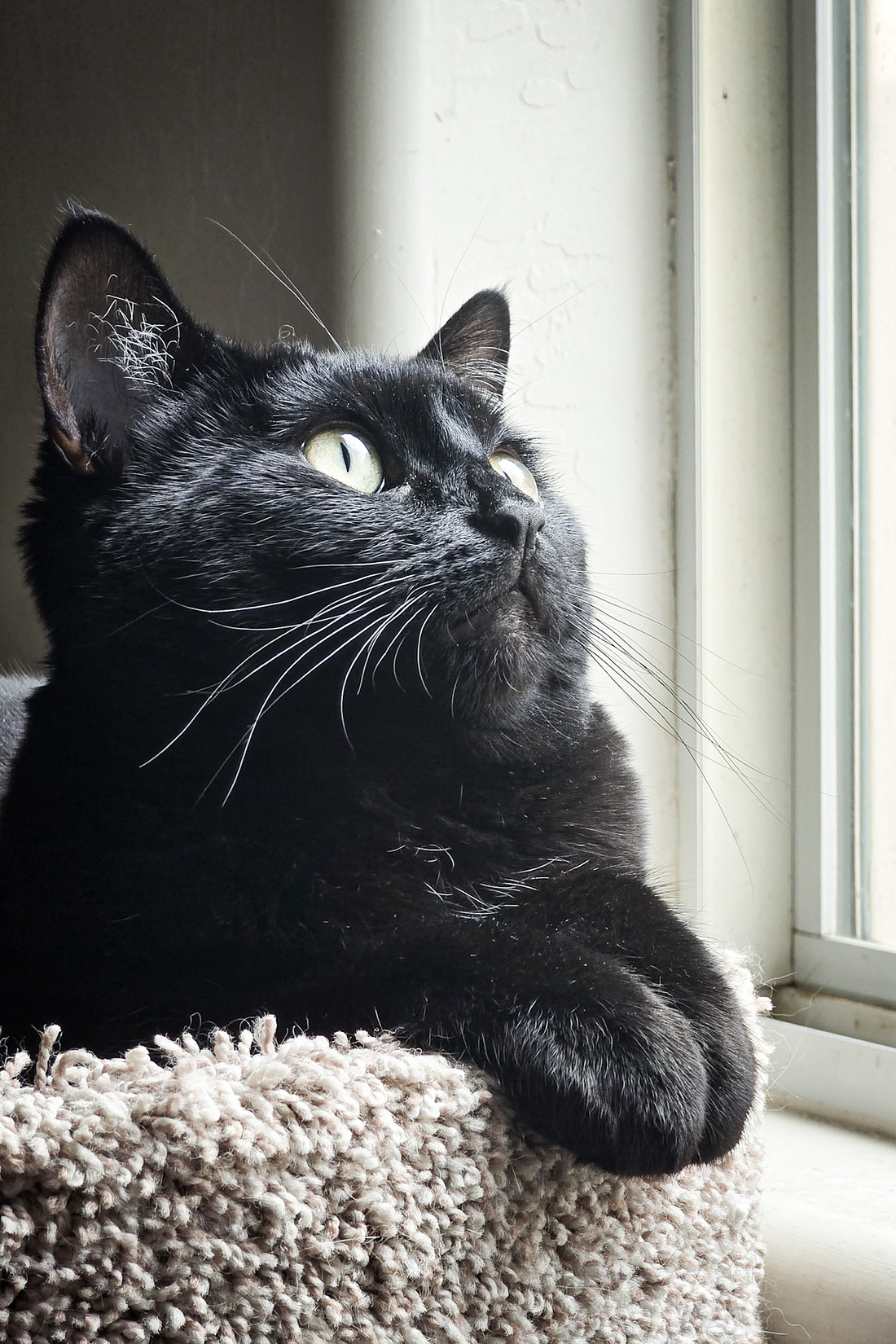
I miss Covid.
Not the virus. Not the refrigerated trucks parked outside hospitals, or the more than 1.2 million Americans who did not come out the other side. What I miss is the way we treated each other for a while, when the whole country quit pretending at once.
Haircuts became a matter of opinion. Pants became optional below the edge of the laptop. The colleague who had spent a decade projecting quiet authority from a corner office turned out to own a lava lamp and a beagle with strong views about the mailman.
Somebody’s kid wandered into the budget meeting in a cape and asked whether it was nearly over. Everyone else had been wondering the same thing.
I photograph houses for a living, so pretense is my trade. My job is to make a home look as though nobody has ever dropped a sock in it. I move the toaster. I hide the dog bowl. For a fee I will fill an empty room with furniture that has never been anywhere near it.
So I speak with some professional authority when I say that for about two years America stopped staging the living room. We were better company for it.
We have since put the staging back, and I suspect we have gone further. In some ways we treat each other worse now than we did before the pandemic began.
The Lawyer Who Was Not a Cat
The patron saint of the era is a Texas attorney named Rod Ponton. In February 2021 he logged in to a virtual hearing in Presidio County and appeared before Judge Roy Ferguson as a fluffy white kitten.
The filter lived on his secretary’s old Dell, and he could not switch it off. While the kitten’s eyes darted about in visible panic, Mr Ponton assured the court, “I’m here live, I’m not a cat.” The judge allowed that he could see that. Mr Ponton offered to proceed anyway.
The kitten got the laughs, but the courtroom deserved the credit. A room full of people paid to look composed kept straight faces and carried on. Nobody was held in contempt. Every one of them had been a wrong click away from the same fate.
That was the bargain of those years. We all had a cat on our face, and we agreed not to make a fuss about it.
Backstage, Everyone Wears Sweatpants
In 1959 the sociologist Erving Goffman argued that social life is a kind of theater. On the front stage we play the part expected of us, the capable employee, the calm parent, the neighbor who definitely did not hear that argument. Backstage the costume comes off, and we get to be tired and petty and ourselves.
The pandemic pulled the curtain back. For the first time in most working lives the audience could see backstage, and the audience was backstage too, sitting in its own kitchen. Nobody sneered at your bookshelf, because their own sat right behind them with three copies of the same airport thriller.
Admitting you had not worn real shoes since March was a small thing to have in common. Most friendships are built out of small things.
Researchers have since put numbers to the feeling. Ashley Hardin of Washington University in St. Louis and Beth Schinoff, who did her doctoral work here in Arizona, studied what happens when we glimpse a coworker’s private life. The accidental glimpses did the most good.
People were keener to work with, or befriend, a colleague after watching that colleague’s child barge into a meeting than after hearing the same colleague mention being named employee of the month. The unplanned moment seemed genuine. The announcement seemed like an announcement. Even unflattering glimpses tended to make people seem more human, not less.
The toddler beat the plaque. Any parent could have told you that for free.
Necessity, Mother of Kindness
Glimpses happen to you. What came next, people did on purpose, and nearly all of it shared one trait. Each kindness was a workaround, improvised because the pandemic had taken something away. In 2019 nobody would have thought of them, because nobody needed them.
It began within days. On the evening of March 12, 2020, with Italy newly locked down, a lone voice in Siena started singing the “Canto della Verbena,” an old Tuscan song about the city asleep. Neighbors along the empty street joined in from their own windows.
By the next night Naples, Rome and Turin had caught on, with guitars, accordions and saucepan lids. Nobody could go out to the street, so the street came to the windows.
On March 14, the day Spain locked down, a personal trainer in Seville named Gonzalo climbed onto the roof of the pool house in his apartment complex. His neighbors, rallied on WhatsApp, followed his jumping jacks and squats from their balconies. The gym was shut. Nobody seemed to miss it.
In Madison, South Dakota, a sixth-grader named Rylee Anderson emailed her math teacher, Chris Waba, because graphing a function made no sense to her. Several emails later it still made none.
So Mr Waba, who lived down the street, picked up a whiteboard and a marker and walked over. He crouched on her porch and worked three problems with her through the screen door. It took about 10 minutes. Her father took a picture, and it went around the country.
In Brooklyn, a landlord named Mario Salerno taped a notice to the doors of his 18 buildings telling some 200 tenants not to bother with April’s rent. He signed off by asking them to stay safe, help their neighbors and wash their hands. Landlords are rarely cast as the heroes of anything. This one volunteered for the part.
The hospitals produced the most tender inventions, because that is where the distance hurt most.
Robertino Rodriguez, a respiratory therapist in San Diego, disliked walking into frightened patients’ rooms looking like an astronaut. So he laminated a large photo of his own smiling face and pinned it to his gown. Within days nurses and doctors from Los Angeles to São Paulo were doing the same.
In São Carlos, Brazil, a nurse named Vanessa Formenton and a nursing technician named Semei Araujo Cunha filled latex gloves with warm water and tied them off like water balloons. They laced them through the fingers of intubated patients, so that someone alone in an isolation ward could feel something like a hand in theirs. They called them “hands of love.”
At Vanderbilt in Nashville, a nurse named Maddie Hayes held up an iPad for two hours so the children of Frank Rummo, an 81-year-old man dying of Covid, could say goodbye to their father.
And in Riverside, California, there was Paige Okray. She was 10. Her mother worked in a hospital Covid unit, which meant keeping away from Paige’s grandparents.
So Paige spent hours on the family room floor with a shower curtain, sandwich bags, paper plates and a hot glue gun. The result was a “hug curtain,” with sleeves for arms. She hung it in her grandparents’ doorway and hugged them for the first time in months.
A public health official pointed out, correctly, that a shower curtain is not protective equipment. Nana did not appear to care.
Hardly any of these people were famous before, and most went quietly back to ordinary life afterward. The pandemic had put up walls everywhere at once. Because the walls were impossible to miss, people found ways over them.
We were, it turns out, rather good at being human when it was obviously required.
One Spring of Togetherness
For a moment the whole country seemed to be in the same boat. In April 2020, 90% of Americans told YouGov that “we’re all in it together,” up from 63% two years earlier.
Economists at Stanford found that partisan hostility dipped in the first months of the pandemic. That is the rally you would expect when a common enemy turns up at the door.
It did not last. Masks became flags and reopening became a referendum. By the summer, after the killing of George Floyd, the same researchers found hostility climbing back toward where it began. The virus became one more thing to fight about.
So I am not pining for a national harmony that never existed. What I miss is smaller and closer to home, the people right in front of us. The coworker, the neighbor, the man at the hardware store in a mask printed with cartoon lips.
Then we went back to our corners and started sharpening things.
The Ascent of Man, in Reverse
Here the jokes get harder to make.
The rot predates the pandemic, and the pause was brief. In 2016, Pew found that 47% of Republicans considered Democrats more immoral than other Americans. By 2022 the figure was 72%. Among Democrats looking at Republicans it rose from 35% to 63%.
Moral contempt for the other side is now the majority view in both parties.
Psychologists measure something blunter still. Nour Kteily of Northwestern and his colleagues built the “Ascent of Man” scale around that famous drawing of a stooped ape straightening, step by step, into a man. You place a group somewhere on the line, from zero for the ape to 100 for fully human.
American partisans, asked to rate the other side, park it roughly 20 to 30 points short of human.
That is ordinary people, asked politely by a scientist, putting their own neighbors partway toward the knuckle-dragging end. Kteily has found the two sides even do it differently. Conservatives tend to see liberals as immature, children in need of supervision. Liberals tend to see conservatives as savage, brutes in need of a leash.
Neither is how you would describe someone whose cat you met on a Tuesday call.
We caught a glimpse of each other backstage, then went back to performing. Only now the show is louder, and the costume is a party.
Loneliness does not help. In 2023 the surgeon general, Vivek Murthy, declared it an epidemic. About half of American adults reported feeling lonely, and he likened the health risk of disconnection to smoking up to 15 cigarettes a day. Lonely people are not famous for giving others the benefit of the doubt.
And we are trimming our circles on purpose. A study published this year in PNAS Nexus found that 37% of Americans say they have lost at least one relationship over politics, most often a friendship. Those who cut someone off tended to hold more distorted views of the other side afterward.
The less we see of each other, the more monstrous we become in each other’s heads.
It is hard to dehumanize a man whose beagle you know by name.
A stranger in a cable news segment is a much easier target.
The Good News Nobody Ordered
Researchers led by Samantha Moore-Berg at the University of Pennsylvania asked partisans how much they thought the other side disliked and dehumanized them. Both sides guessed far too high.
People believed the other party placed them some 60 points short of human. The true number was closer to 20. We are being dehumanized far less than we fear.
Alex Landry, a researcher who worked on the problem, called it possibly “the only good news in political science in the past decade.” He was only half joking.
The mistake is also easy to fix. Landry and his colleagues ran experiments in which they simply told people the true numbers. That was the whole treatment. Partisans who learned that the other side did not, in fact, see them as apes promptly dehumanized the other side less, and the effect lasted at least a week.
Much of our contempt, it seems, is a grudge held in advance. We sneer back at a sneer that mostly is not there.
That is the closest thing to a lesson the pandemic left behind. Contact corrects. A messy kitchen, a kid in a cape, a teacher on the porch, each makes it harder to file someone under subhuman.
In Defense of the Necktie
The obvious objection is that I am romanticizing a catastrophe from a comfortable chair. It is a fair hit. Plenty of people never got the sweatpants version of the pandemic. Nurses, grocery clerks and delivery drivers worked through it in person, often frightened and often underpaid.
Others lost jobs, or loved ones, or a year of a child’s schooling that will not come back. Lockdown nostalgia is largely a luxury for people whose work fits on a laptop. Mine mostly does, although I still had to go and stand in other people’s houses.
There is a case for pretense, too. Goffman never said the front stage was bad. Manners are a performance, and they let strangers cooperate without first comparing notes on God and tax policy. A dress code can be a courtesy. A wall between work and home is not hypocrisy.
Many people were desperate to get back to the office precisely because the backstage had started to feel like a cell.
I grant all of it. I am not asking for the virus back, or the lockdowns, or even the sweatpants, though I would not refuse the sweatpants. What made those years oddly humane was the shared admission that everyone is a bit of a mess and that the mess is not disqualifying.
We can keep that without anybody getting sick.
Letting the Cat Back In
Nobody needs a hug curtain anymore. The walls between us now are ones we built ourselves, out of politics and habit and too many evenings alone. They are harder to see than a locked school, and harder to climb.
But the people singing from windows in Siena and crouching on a porch in South Dakota were not a different species. They were us, about six years ago. Whatever they had, we still have. It is presumably in a drawer somewhere, next to the sourdough starter.
Getting it out is not complicated. We keep the friend we disagree with. We ask what they actually think, not what the loudest person on their side said on television. We assume, as the evidence says we safely can, that they think better of us than we fear.
We let the meeting run two minutes over so someone can tell us about their dog, and now and then we leave the laundry basket in the frame.
I will go on moving toasters for a living. A listing photo is meant to be a small fantasy, and nobody buys a house to look at the seller’s socks. But people are not listings, and we do not need to be staged for each other.
Now and then we need to be caught in the frame with the lamp and the clutter and the kid in the cape. And we need to discover that the person on the other side of the screen, the one who votes the wrong way and says so, has been sitting in a messy kitchen too.
So where did the cat go? Nowhere, really. It is still at home, curled up by the laptop, waiting for one of us to leave the camera on.